
Environmental Consultancy Services
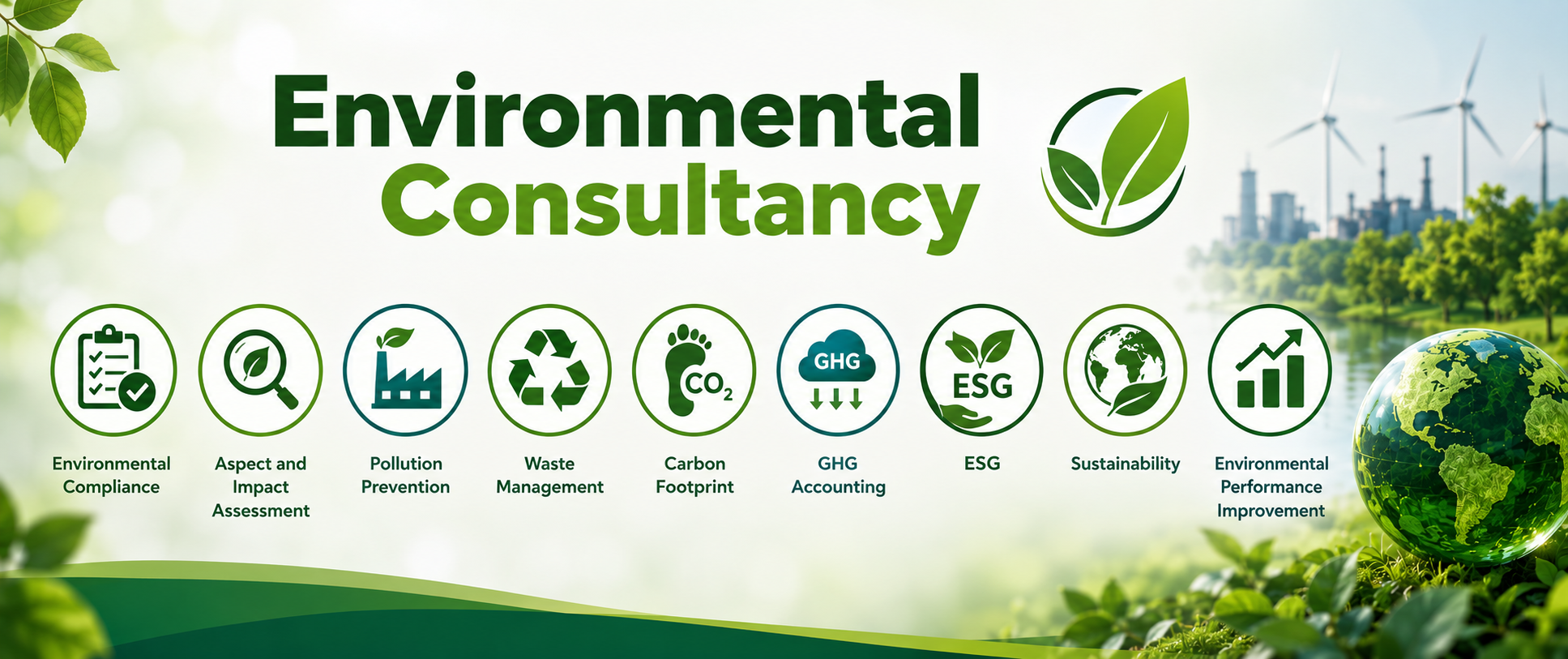
Environmental Consultancy helps organizations identify, manage and improve the environmental impacts associated with their activities, products and services. Akshar Management Consultant provides practical environmental consultancy covering environmental compliance, aspect and impact assessment, pollution prevention, waste management, carbon footprint, GHG accounting, ESG, sustainability and environmental performance improvement.
What is Environmental Consultancy?
Environmental Consultancy is professional support provided to organizations for identifying, evaluating and managing environmental aspects, impacts, risks, compliance obligations and improvement opportunities.
An Environmental Consultant helps organizations understand how their activities may affect the environment and develop practical measures for controlling or reducing adverse environmental impacts.
Key Areas Covered in Environmental Consultancy
The scope can be customized according to the organization’s industry, activities and specific environmental requirements.
- Environmental Aspect and Impact Assessment
- Environmental Risk Assessment
- Environmental Legal Compliance
- Environmental Compliance Evaluation
- Waste Management
- Hazardous Waste Management
- Waste Reduction
- Waste Segregation
- Recycling and Reuse
- Water Management
- Water Conservation
- Wastewater Management
- Air Emission Management
- Pollution Prevention
- Chemical Management
- Resource Conservation
- Environmental Objectives
- Environmental Performance Monitoring
- Environmental Audits
- Environmental Emergency Preparedness
- Carbon Footprint
- Sustainability
- Environmental Management Systems
- ISO 14001 Implementation
Our Environmental Consultancy Services
Environmental Legal Compliance Consultancy
Our Environmental Compliance Consultancy helps organizations identify and manage applicable environmental legal and other requirements relevant to their activities.
We can support organizations in:
- Identifying applicable environmental requirements
- Developing legal compliance registers
- Evaluating compliance status
- Identifying compliance gaps
- Establishing compliance monitoring processes
- Tracking relevant legal and regulatory changes
- Developing corrective action plans
Our approach helps organizations establish a more systematic process for managing Environmental Legal Compliance.
Environmental Risk Assessment
Our Environmental Risk Assessment services help organizations identify environmental risks associated with their activities and evaluate their potential consequences. The assessment can support the identification of appropriate controls, preventive measures and environmental improvement priorities.
Environmental risks may include:
- Chemical spills
- Leakage
- Accidental releases
- Air pollution
- Water pollution
- Soil contamination
- Improper waste handling
- Resource depletion
- Environmental emergencies
Waste Management Consultancy
Our Waste Management Consultancy helps organizations establish practical systems for identifying, segregating, and managing different types of waste.
Organisation can improve waste management practices through:
- Waste identification
- Waste classification
- Waste segregation
- Waste storage
- Waste handling
- Waste reduction
- Recycling and reuse opportunities
- Waste tracking
- Waste disposal planning
The objective is to help organizations improve control over waste generation and identify opportunities for waste minimization.
Hazardous Waste Management Consultancy
Our Hazardous Waste Management Consultancy services help organizations strengthen the management of hazardous waste generated from their activities.
The consultancy may include:
- Hazardous waste identification
- Waste classification
- Segregation requirements
- Storage controls
- Handling procedures
- Labeling
- Record management
- Disposal controls
- Emergency response arrangements
The exact requirements depend on the nature of the waste and applicable environmental regulations.
Water Management Consultancy
Our Water Management Consultancy helps organizations understand and improve water use, water consumption and water-related environmental impacts.
Support may include:
- Water balance development
- Identification of major water users
- Water conservation opportunities
- Water monitoring
- Reduction of water losses
- Wastewater generation analysis
- Water efficiency improvement
The objective is to help organizations improve the efficient use and management of water resources.
Wastewater Management Support
We help organizations understand and manage wastewater generation associated with relevant activities and processes.
The consultancy may include support for:
- Identifying wastewater sources
- Process wastewater analysis
- Wastewater monitoring
- Effluent management practices
- Reduction of wastewater generation
- Operational controls
- Performance monitoring
Improvement opportunities can be identified based on the organization’s activities and applicable environmental requirements.
Air Emission Management
Our Environmental Consultancy can support organizations in identifying and managing air emissions associated with relevant activities and processes.
This may include:
- Identification of emission sources
- Emission monitoring
- Process controls
- Air pollution prevention measures
- Equipment-related controls
- Record management
- Performance improvement
The approach is adapted to the organization’s activities and applicable requirements.
Pollution Prevention Consultancy
Our Pollution Prevention Consultancy focuses on identifying opportunities to prevent or reduce pollution at its source.
Potential improvement areas may include:
- Reduction of waste generation
- Reduction of air emissions
- Reduction of wastewater
- Reduction of chemical releases
- Improved process controls
- Resource efficiency
- Improved material management
Prevention at the source can often provide more effective environmental improvement than relying only on treatment or disposal.
Resource Conservation Consultancy
Our Environmental Management Consultancy can help organizations identify opportunities to improve the use of natural resources.
This may include:
- Energy conservation
- Water conservation
- Raw material optimization
- Material efficiency
- Reduction of process losses
- Reuse opportunities
- Recycling opportunities
Resource conservation initiatives can support both environmental performance and operational efficiency.
Environmental Sustainability Consultancy
Our Environmental Sustainability Consultancy helps organizations identify practical opportunities to improve the environmental sustainability of their operations.
The scope may include:
- Resource efficiency
- Waste reduction
- Environmental performance improvement
- Sustainable operational practices
- Reduction of environmental impacts
- Carbon footprint initiatives
- Sustainability objectives
The consultancy approach can be adapted to the organization’s business activities and sustainability priorities.
Carbon Footprint Consultancy
Our Carbon Footprint Consultancy helps organizations understand and evaluate greenhouse gas emissions associated with their activities.
Depending on the scope, support may include:
- Defining organizational boundaries
- Identifying relevant emission sources
- Collecting activity data
- Identifying relevant emission factors
- Calculating greenhouse gas emissions
- Developing an emissions inventory
- Identifying reduction opportunities
Carbon footprint assessment can help organizations better understand their climate-related environmental impacts and identify opportunities for improvement.
Environmental Objectives and Improvement Programs
We help organizations establish environmental objectives and develop action plans for improving environmental performance.
Objectives may address:
- Waste reduction
- Water conservation
- Emission reduction
- Pollution prevention
- Resource conservation
- Recycling
- Environmental compliance
Improvement programs can include responsibilities, actions, resources, timelines and performance indicators.
Environmental Audit and Assessment
Our Environmental Consultancy Services can include environmental audits and assessments to evaluate existing environmental practices, controls and improvement opportunities.
An environmental assessment can help organizations identify:
- Environmental compliance gaps
- Weaknesses in environmental controls
- Environmental risks
- Improvement opportunities
- Waste reduction opportunities
- Resource efficiency opportunities
Environmental Emergency Preparedness
Organizations may face environmental emergency situations associated with spills, leaks, fires, chemical releases or other incidents. We help organizations identify potential environmental emergencies and develop appropriate preparedness and response arrangements.
This may include:
- Identification of potential emergency situations
- Emergency response planning
- Spill response arrangements
- Environmental emergency procedures
- Employee awareness
- Testing and review of emergency arrangements
Environmental Training and Awareness
Environmental performance depends on employee awareness and participation.
We provide support for Environmental Training and Awareness based on organizational activities and employee responsibilities.
Training topics may include:
- Environmental awareness
- Waste management
- Hazardous waste management
- Environmental legal compliance
- Pollution prevention
- Environmental aspects
- Resource conservation
- Environmental emergency response
Environmental Performance Monitoring
Effective Environmental Performance Improvement requires relevant monitoring and evaluation. We support organizations in identifying appropriate environmental performance indicators and monitoring methods based on their significant environmental aspects and objectives.
Potential indicators may relate to:
- Energy consumption
- Water consumption
- Waste generation
- Recycling rates
- Air emissions
- Wastewater
- Resource consumption
- Environmental incidents
- Compliance performance
Environmental Consultancy and ISO 14001
Support for Environmental Aspects
Environmental consultancy can support the identification and evaluation of environmental aspects required for an effective Environmental Management System.
Support for Compliance Obligations
Environmental compliance support can help organizations identify and manage applicable legal and other requirements.
Support for Operational Controls
Practical environmental controls can be developed and integrated into relevant organizational processes.
Support for Environmental Objectives
Environmental performance improvement initiatives can support the establishment and achievement of relevant environmental objectives.
Support for Continual Improvement
Environmental assessments and performance monitoring can help identify further opportunities for continual improvement.
Benefits of Environmental Consultancy
Better Environmental Performance
A structured approach can help organizations identify significant environmental aspects and improve their environmental performance.
Improved Environmental Compliance
Environmental Compliance Consultancy can help organizations establish a more systematic approach to identifying and evaluating applicable requirements.
Reduced Environmental Risks
Identifying environmental risks can help organizations establish preventive measures and appropriate operational controls.
Improved Waste Management
Better waste identification, segregation and handling can help organizations strengthen waste management practices.
Reduced Resource Consumption
Environmental improvement initiatives can identify opportunities to reduce unnecessary consumption of energy, water and materials.
Pollution Prevention
Preventive approaches can help organizations reduce adverse environmental impacts at their source.
Better Environmental Data
Environmental monitoring can provide useful information for evaluating performance and supporting improvement decisions.
Improved Environmental Awareness
Training and employee involvement can help strengthen environmental responsibility across the organization.
Sustainable Environmental Improvement
A structured improvement approach helps organizations continue improving environmental performance over time.
Who Needs Environmental Consultancy?
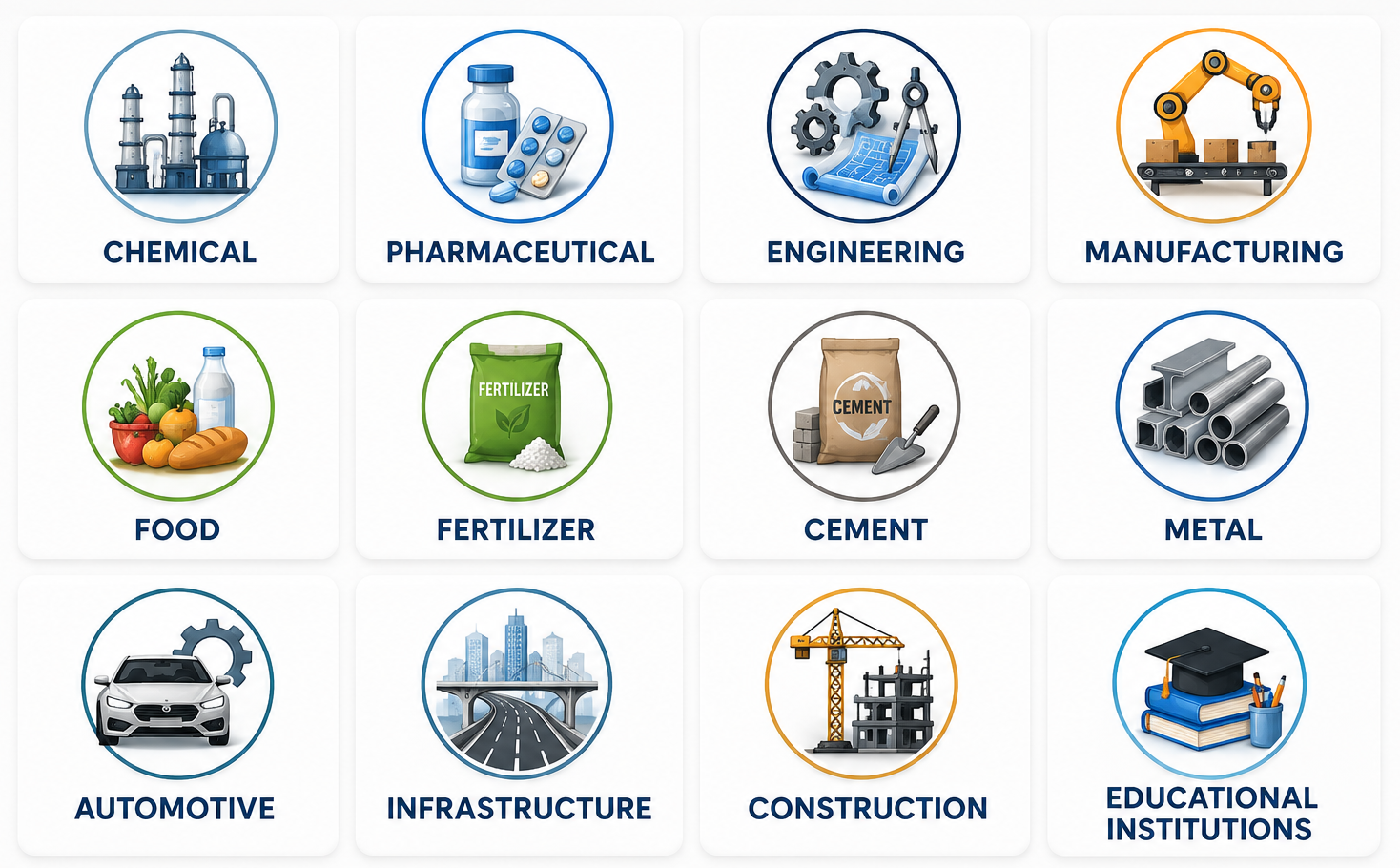
- Manufacturing organizations
- Engineering companies
- Chemical industries
- Process industries
- Ceramic industries
- Pharmaceutical organizations
- Food and beverage organizations
- Construction companies
- Oil and gas organizations
- Energy organizations
- Logistics and warehousing
- Healthcare organizations
- Hotels and large facilities
- Small and medium-sized enterprises
Why Choose Akshar Management Consultant for Environmental Consultancy?
Practical Environmental Solutions
Our Environmental Consultant focuses on practical environmental improvement measures based on your organization’s actual activities, processes and environmental aspects.
Broad Environmental Expertise
Our Environmental Consultancy Services can cover multiple areas, including compliance, waste, resource management, pollution prevention, sustainability and environmental management systems.
Customized Consultancy Scope
Our Environmental Management Consultancy is adapted to the organization’s activities, industry, environmental risks and specific requirements.
Beyond ISO 14001
Our consultancy can support organizations that require environmental improvement without necessarily pursuing ISO 14001 certification.
Implementation-Focused Approach
We focus on helping organizations implement practical environmental improvements rather than providing recommendations alone.
Frequently Asked Questions About Environmental Consultancy
How are significant environmental aspects determined?
- Significant environmental aspects are typically determined using defined evaluation criteria such as environmental impact severity, frequency, quantity, scale, legal requirements, stakeholder concerns, likelihood of occurrence and effectiveness of existing controls. The organization should establish a consistent methodology suitable for its activities and environmental context.
How do you distinguish an environmental aspect from an environmental impact?
- An environmental aspect is an element of an organization’s activities, products or services that can interact with the environment. An environmental impact is the resulting change to the environment, whether adverse or beneficial.
- For example, chemical storage may be an environmental aspect, while soil contamination caused by a chemical spill may be the environmental impact.
How is an Environmental Aspect and Impact Register developed?
- An Environmental Aspect and Impact Register is developed by identifying organizational activities, determining associated environmental aspects, identifying potential impacts, evaluating significance and documenting existing or required operational controls.
- The register may consider normal operations, abnormal conditions, startup, shutdown and potential emergency situations.
How do you identify indirect environmental aspects?
- Indirect environmental aspects may arise from activities that an organization does not directly control but can influence, such as suppliers, contractors, outsourced processes, transportation, product design, procurement decisions and product end-of-life considerations.
How are life-cycle considerations incorporated into environmental management?
- Life-cycle considerations involve examining environmental impacts associated with relevant stages of a product or service, including raw material acquisition, design, production, transportation, use and end-of-life treatment, where relevant to the organization’s control and influence.
How is environmental legal compliance evaluated?
- Environmental compliance is evaluated by identifying applicable legal and other requirements and comparing them with the organization’s actual practices, permits, monitoring data, records and operational controls.
- Compliance evaluation should be systematic and conducted at planned intervals.
What is an environmental compliance register?
- An environmental compliance register is a structured record of applicable environmental laws, regulations, permits, consent conditions and other requirements relevant to an organization’s activities.
- It may identify the requirement, applicability, responsible person, compliance status, evidence and actions required to address gaps.
How are changes in environmental legislation managed?
- Organizations can establish a process to identify relevant changes in environmental laws, regulations, permit conditions and other compliance obligations and evaluate how these changes affect existing operations and controls.
How is waste generation quantified?
- Waste generation can be quantified by measuring the quantity, type and source of waste generated over a defined period. Waste data can then be normalized against production output, revenue, employee numbers or another relevant operational indicator.
What is a waste stream analysis?
- A waste stream analysis examines where waste is generated, its composition, quantity, frequency and current disposal route. It can help identify opportunities for source reduction, reuse, recycling, recovery or improved treatment.
How is waste segregation effectiveness evaluated?
- Waste segregation can be evaluated through waste audits, visual inspections, contamination levels, disposal records, recycling data and periodic verification of waste storage areas.
How can an organization measure recycling performance?
- Recycling performance may be measured using indicators such as the percentage of total waste recycled, quantity of materials recovered, recycling rate by waste category and reduction in waste sent for final disposal.
How are hazardous waste storage controls evaluated?
- Hazardous waste storage controls can be evaluated by reviewing segregation, compatibility, container condition, labeling, secondary containment, storage duration, spill prevention, emergency arrangements and record management.
How is a waste hierarchy applied?
- The waste hierarchy generally prioritizes prevention, reduction, reuse, recycling, recovery and disposal. Organizations should first consider opportunities to prevent waste generation before relying on disposal solutions.
How is water consumption analyzed?
- Water consumption can be analyzed by identifying significant water users and monitoring consumption through water meters, process measurements, utility records and water balance calculations.
What is a water balance?
- A water balance compares water entering an organizational boundary with water used, incorporated into products, discharged, evaporated, lost or stored. It can help identify significant consumption and potential losses.
How are water leaks identified?
- Water leaks can be identified through meter readings, night-flow monitoring, water balance analysis, pressure monitoring, physical inspections and comparison of expected versus actual water consumption.
How is wastewater generation evaluated?
- Wastewater evaluation may include identifying sources, flow rates, volume, characteristics, discharge points, treatment processes and monitoring requirements.
What parameters may be monitored in wastewater?
- Relevant parameters depend on the type of wastewater and applicable requirements. Monitoring may include parameters such as pH, COD, BOD, TSS, oil and grease, temperature and other industry-specific pollutants.
How are air emission sources identified?
- Air emission sources can be identified through a process review covering combustion equipment, process equipment, chemical use, material handling, dust-generating operations, storage tanks, vehicles and other relevant activities.
How is an emission inventory developed?
- An emission inventory identifies relevant emission sources, emission types, operating conditions, monitoring methods and available activity data. It can be used to support compliance monitoring and environmental performance improvement.
How is fugitive emission risk evaluated?
- Fugitive emissions may be evaluated by examining potential releases from valves, pumps, flanges, storage areas, transfer operations, open processes and material handling activities.
How is noise impact assessed?
- Noise impact may be assessed by identifying noise sources, conducting appropriate measurements, evaluating exposure or environmental boundaries and comparing results with applicable requirements or organizational criteria.
How is soil contamination risk assessed?
- Soil contamination risk can be evaluated by identifying chemical storage areas, spill-prone activities, underground systems, waste handling areas and historical incidents that may result in contamination.
How are chemical spill risks evaluated?
- Chemical spill risks are evaluated by considering chemical hazards, storage quantity, transfer activities, container integrity, handling practices, drainage pathways, secondary containment and emergency response capability.
What is secondary containment and when is it required?
- Secondary containment is an additional physical barrier designed to contain leaks or spills from primary containers. Its requirements depend on the material stored, quantity, location and applicable legal or organizational requirements.
How are environmental emergency scenarios identified?
- Environmental emergency scenarios can be identified through reviews of chemical inventories, process hazards, historical incidents, abnormal operating conditions, equipment failures, natural events and potential accidental releases.
How is an environmental emergency response plan tested?
- Environmental emergency arrangements can be tested through drills, simulations, tabletop exercises and practical response exercises. The results should be reviewed to identify improvement opportunities.
How is environmental monitoring data evaluated?
- Environmental monitoring data can be evaluated using trends, comparison with limits, historical performance, objectives and operational conditions. Unexpected changes may require investigation and corrective action.
How are environmental KPIs established?
- Environmental KPIs should be linked to significant environmental aspects, objectives and improvement priorities. Examples include water consumption per unit of production, waste generation per unit of output, recycling percentage, energy intensity and emission intensity.
What is an environmental performance indicator?
- An environmental performance indicator is a measurable value used to evaluate an organization’s environmental performance. It can be an operational, management or environmental condition indicator depending on the monitoring objective.
How can environmental data be normalized?
- Environmental data can be normalized against a relevant business or operational parameter, such as production quantity, operating hours, floor area, employee numbers or revenue, to provide more meaningful comparisons over time.
How are environmental improvement opportunities prioritized?
- Improvement opportunities can be prioritized based on environmental significance, legal compliance, risk, cost, feasibility, resource requirements, expected environmental benefits and alignment with organizational objectives.
How is an environmental baseline established?
- An environmental baseline is established using reliable historical or current data on relevant environmental performance, such as energy use, water consumption, waste generation, emissions or compliance performance.
How is an environmental objective made measurable?
- A measurable environmental objective should define the intended improvement, relevant indicator, baseline, target value, timeframe, responsible person and monitoring method.
How do you verify whether an environmental improvement has been effective?
- Effectiveness can be verified by comparing post-implementation environmental performance with the established baseline and defined objectives, while considering changes in production levels and other relevant operational factors.
How is an environmental audit planned?
- An environmental audit is planned by defining the scope, objectives, criteria, audit areas, processes, locations, legal requirements, audit team and schedule.
What evidence is reviewed during an environmental audit?
- Evidence may include permits, licenses, monitoring records, waste manifests, inspection records, training records, environmental registers, operational procedures, incident records and physical observations.
How is an environmental nonconformity investigated?
- An environmental nonconformity should be investigated by determining the immediate issue, extent of the problem, underlying causes, contributing factors, affected compliance requirements and necessary corrective actions.
How do you evaluate the effectiveness of environmental corrective actions?
- Effectiveness can be evaluated by reviewing whether the action has prevented recurrence and whether relevant environmental monitoring data, inspections, audits or compliance evaluations demonstrate the intended result.
How is carbon footprint organizational boundary determined?
- The organizational boundary defines which facilities, operations or entities are included in the greenhouse gas inventory. The selected boundary should be consistently applied and aligned with the chosen reporting methodology.
What is the difference between direct and indirect greenhouse gas emissions?
- Direct emissions originate from sources owned or controlled by the organization, while indirect emissions are associated with activities such as purchased energy and other value-chain activities, depending on the reporting scope.
How is activity data collected for a carbon footprint?
- Activity data may include fuel consumption, electricity use, transportation data, material quantities, refrigerant consumption and other relevant operational information.
How are emission factors selected?
- Emission factors should be selected from relevant and reliable sources and should be appropriate to the geographical location, reporting period, fuel type, energy source and calculation methodology.
How is carbon footprint data quality assessed?
- Data quality can be evaluated based on completeness, accuracy, consistency, reliability, traceability and relevance. Assumptions and data gaps should be documented.
How can environmental requirements be integrated into procurement?
- Environmental considerations can be incorporated into procurement through supplier requirements, material specifications, environmental criteria, packaging requirements, restricted substance controls and evaluation of environmental performance.
How is supplier environmental performance evaluated?
- Supplier environmental performance may be evaluated through supplier questionnaires, audits, certifications, environmental KPIs, compliance information and performance reviews, depending on the significance of the supplied product or service.
How can environmental controls be integrated into operational procedures?
- Environmental controls should be incorporated into relevant work instructions, standard operating procedures and operational planning based on significant environmental aspects and applicable requirements.
How are environmental responsibilities assigned?
- Responsibilities should be assigned according to relevant roles and activities, including environmental monitoring, waste management, legal compliance, emergency response, operational control and performance reporting.
How can digital tools support environmental management?
- Digital tools can support environmental data collection, legal compliance tracking, waste tracking, inspection management, performance dashboards, action tracking and environmental reporting.
How can Environmental Consultancy support ISO 14001 implementation?
- Environmental Consultancy can provide technical support for environmental aspect assessment, compliance obligations, operational controls, environmental objectives, performance monitoring, internal audit and continual improvement, which can support the implementation and improvement of an ISO 14001 Environmental Management System.