
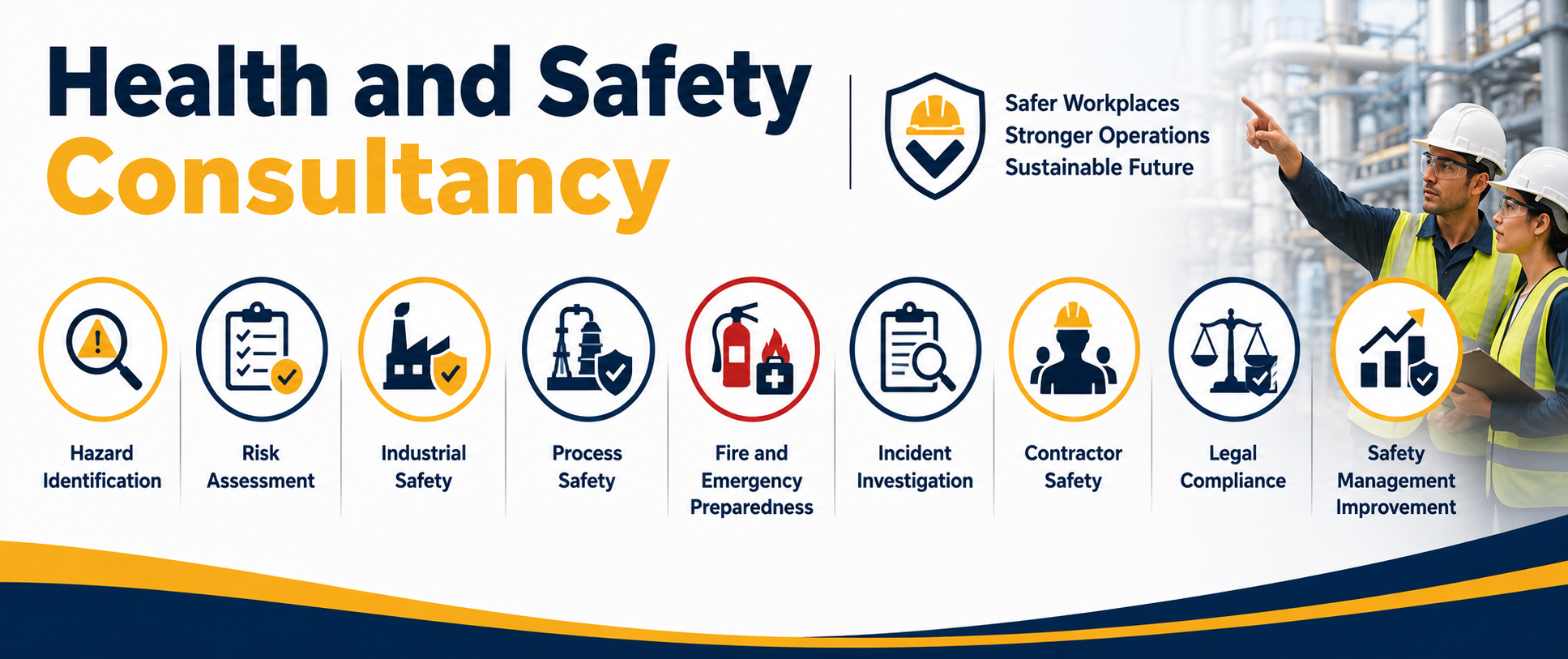
Health & Safety Consultancy Services
Health & Safety Consultancy helps organizations identify workplace hazards, control risks and improve occupational health and safety performance. Akshar Management Consultant provides practical health and safety consultancy covering HIRA, risk assessment, industrial safety, process safety, fire and emergency preparedness, incident investigation, contractor safety, legal compliance and safety management improvement.
What is Health & Safety Consultancy?
Health & Safety Consultancy is professional support provided to organizations for identifying workplace hazards, evaluating health and safety risks and implementing appropriate control measures.
A Health and Safety Consultant helps organizations establish systematic processes for managing occupational health and safety risks. Depending on the organization’s requirements, Safety Management Consultancy may focus on hazard identification, risk assessment, legal compliance, operational safety controls, inspections, incident investigation, emergency preparedness or employee safety awareness.
The objective is to help organizations reduce the likelihood of workplace injuries and unsafe conditions while improving the effectiveness of their occupational health and safety practices.
Key Areas Covered in Health & Safety Consultancy
The scope can be customized according to the organization’s activities, workplace hazards, industry and specific safety requirements.
- Hazard Identification
- Risk Assessment
- Workplace Risk Assessment
- Health and Safety Legal Compliance
- Safety Audits
- Safety Inspections
- Job Safety Analysis
- Job Hazard Analysis
- Safe Operating Procedures
- Machinery Safety
- Equipment Safety
- Lockout and Tagout
- Permit to Work
- Work at Height Safety
- Confined Space Safety
- Electrical Safety
- Fire Safety
- Chemical Safety
- PPE Assessment
- Ergonomic Risk Assessment
- Manual Handling
- Contractor Safety Management
- Incident Investigation
- Root Cause Analysis
- Near Miss Management
- Emergency Preparedness
- Safety Training
- Safety Performance Monitoring
Our Health & Safety Consultancy Services
Hazard Identification and Risk Assessment
Our Hazard Identification and Risk Assessment services help organizations systematically identify workplace hazards and evaluate associated risks.
The assessment may consider:
- Routine and non-routine activities
- Normal and abnormal conditions
- Equipment and machinery
- Physical, chemicals hazards
- Ergonomic hazards
- Workplace conditions
- Human factors
- Emergency situations
The results can be used to prioritize risks and establish appropriate control measures.
Safety Legal Compliance Consultancy
Our Health and Safety Compliance Consultancy helps organizations identify and manage applicable occupational health and safety legal and other requirements.
Support may include:
- Identification of applicable requirements
- Development of legal registers
- Compliance evaluation
- Identification of compliance gaps
- Review of permits and records
- Development of corrective action plans
- Compliance monitoring
A systematic compliance process can help organizations better understand and manage their occupational health and safety obligations.
Workplace Safety Audit Consultancy
Our Safety Audit Consultancy helps organizations evaluate existing workplace safety practices and identify gaps and improvement opportunities.
Safety audits may review areas such as:
- Workplace conditions
- Safety management practices
- Hazard controls
- Equipment safety
- Employee awareness
- Emergency preparedness
- Legal compliance
- Incident management
- Safety records
Audit findings can be used to develop practical safety improvement plans.
Safety Inspection Consultancy
Our Safety Inspection Consultancy helps organizations establish structured workplace inspection programs.
Safety inspections can identify:
- Unsafe conditions
- Unsafe acts
- Equipment hazards
- Poor housekeeping
- Missing safeguards
- PPE issues
- Fire hazards
- Electrical hazards
- Emergency preparedness gaps
We can help organizations develop inspection checklists and establish processes for reporting, tracking and closing identified safety issues.
Machinery and Equipment Safety
We help organizations identify and manage health and safety risks associated with machinery, equipment and workplace tools.
The assessment may consider:
- Machine guarding
- Moving parts
- Emergency stops
- Safety interlocks
- Lockout requirements
- Equipment inspections
- Preventive maintenance
- Safe operating practices
The scope depends on the organization’s equipment and applicable safety requirements.
Safe Operating Procedures
Our Safety Management Consultancy can support the development and improvement of safe operating procedures for relevant activities.
Procedures may address:
- Work methods
- Hazard controls
- Equipment operation
- Required PPE
- Pre-start checks
- Emergency actions
- Permit requirements
Safe operating procedures should reflect the actual work environment and be practical for employees to follow.
Job Safety Analysis and Job Hazard Analysis
We support organizations in conducting structured reviews of specific jobs and activities to identify hazards and establish safe methods of work.
A Job Safety Analysis or Job Hazard Analysis may include:
- Breaking the job into steps
- Identifying hazards associated with each step
- Evaluating the risks
- Establishing control measures
- Defining safe work practices
This approach can be useful for routine, non-routine and higher-risk activities.
Work Permit System Consultancy
Our Work Permit System Consultancy helps organizations establish or improve permit-to-work processes for higher-risk activities.
Permit systems may be developed for activities such as:
- Hot work
- Confined space entry
- Work at height
- Electrical work
- Excavation
- Line breaking
- Maintenance activities
The permit process can help ensure that hazards, precautions and responsibilities are considered before work begins.
Lockout and Tagout Safety
We support organizations in establishing safe arrangements for controlling hazardous energy during maintenance, repair and servicing activities.
Lockout and Tagout Consultancy may address:
- Identification of energy sources
- Isolation procedures
- Lockout devices
- Tagging arrangements
- Verification of isolation
- Employee responsibilities
- Training and awareness
Work at Height Safety
We support organizations in identifying and controlling hazards associated with work at height.
The consultancy may address:
- Work planning
- Access methods
- Scaffolding
- Ladders
- Fall protection
- Anchorage
- Inspection
- Rescue arrangements
Confined Space Safety
Our Workplace Safety Consultancy can help organizations establish controls for confined space entry and work.
This may include:
- Confined space identification
- Hazard assessment
- Atmospheric testing
- Ventilation
- Entry permits
- Communication
- Standby arrangements
- Rescue planning
Electrical Safety Consultancy
We support organizations in identifying and improving controls associated with electrical hazards.
The scope may include:
- Electrical risk assessment
- Equipment inspection
- Isolation practices
- Safe work procedures
- Electrical maintenance
- Temporary electrical arrangements
- Employee awareness
Fire Safety Consultancy
Our Fire Safety Consultancy helps organizations identify fire hazards and strengthen fire prevention and emergency response arrangements.
Support may include:
- Fire hazard identification
- Fire risk assessment
- Fire prevention measures
- Emergency equipment
- Fire emergency procedures
- Employee awareness
- Emergency drills
Chemical Safety Consultancy
Our Chemical Safety Consultancy helps organizations identify and manage occupational health and safety risks associated with chemicals and hazardous substances.
The consultancy may include:
- Chemical inventory review
- Hazard identification
- Labeling
- Safety Data Sheet management
- Chemical storage
- Handling procedures
- Exposure controls
- Emergency arrangements
Ergonomic Risk Assessment
Our Ergonomic Risk Assessment services help organizations identify work-related factors that may contribute to discomfort, fatigue or musculoskeletal risks.
The assessment may consider:
- Repetitive work
- Manual handling
- Working posture
- Workstation design
- Lifting
- Pushing and pulling
- Tool design
- Work duration
Manual Handling Safety
We support organizations in identifying and reducing risks associated with manual handling activities.
This may include reviewing:
- Lifting activities
- Load characteristics
- Carrying
- Pushing and pulling
- Workstation layout
- Mechanical assistance
- Safe handling practices
Contractor Safety Management
Contractor activities can create additional workplace risks.
Our Health & Safety Consultancy can help organizations establish contractor safety management processes covering:
- Contractor selection
- Safety requirements
- Risk assessment
- Permit-to-work
- Site induction
- Supervision
- Performance monitoring
- Incident reporting
Incident Investigation Consultancy
Our Incident Investigation Consultancy helps organizations investigate workplace incidents, accidents, near misses and dangerous occurrences.
The objective is to identify underlying and contributing causes rather than focusing only on immediate causes.
- Evidence collection
- Interviews
- Timeline analysis
- Cause analysis
- Root cause analysis
- Corrective action
- Effectiveness review
PPE Consultancy
Our PPE Consultancy helps organizations identify appropriate personal protective equipment based on workplace hazards and job requirements.
Support may include:
- PPE assessment
- PPE selection
- PPE use requirements
- Inspection and maintenance
- Storage
- Employee training
- Replacement requirements
PPE should be considered as part of the overall hierarchy of controls.
Emergency Preparedness Consultancy
Our Emergency Preparedness Consultancy helps organizations identify potential workplace emergency situations and establish appropriate response arrangements.
Potential emergencies may include:
- Fire
- Chemical spills
- Gas releases
- Medical emergencies
- Electrical incidents
- Natural events
- Equipment failures
Support may include emergency planning, response procedures, employee roles, communication arrangements and emergency drills.
Health & Safety Consultancy and ISO 45001
Support for Hazard Identification
Health and safety consultancy can help organizations establish systematic processes for identifying workplace hazards.
Support for Risk Assessment
Practical risk assessment methods can be developed and applied to organizational activities and processes.
Support for Operational Controls
Appropriate safety controls and safe working practices can be integrated into relevant operations.
Support for Legal Compliance
A structured process can help organizations identify and evaluate applicable health and safety requirements.
Support for Incident Management
Incident investigation and root cause analysis can support corrective action and prevention of recurrence.
Support for Continual Improvement
Safety audits, inspections, performance monitoring and employee participation can help identify opportunities for continual improvement.
Benefits of Health and Safety Consultancy
Better Hazard Identification
A structured approach helps organizations identify workplace hazards that may otherwise remain unrecognized.
Improved Risk Control
Risk assessment helps organizations prioritize significant hazards and implement appropriate control measures.
Improved Workplace Safety
Practical safety controls can help improve workplace conditions and reduce exposure to identified hazards.
Better Safety Compliance
Health and Safety Compliance Consultancy can help organizations establish systematic processes for managing applicable requirements.
Improved Incident Prevention
Hazard identification, risk control and learning from incidents can help organizations strengthen incident prevention efforts.
Better Employee Awareness
Relevant training and employee involvement can help employees understand workplace hazards and safety responsibilities.
Improved Emergency Preparedness
Emergency planning and testing can help organizations prepare for potential workplace emergencies.
Stronger Safety Culture
Employee participation, safety communication and continuous improvement can support the development of a positive safety culture.
Sustainable Safety Improvement
Regular monitoring, audits and improvement activities help organizations continually strengthen their health and safety performance.
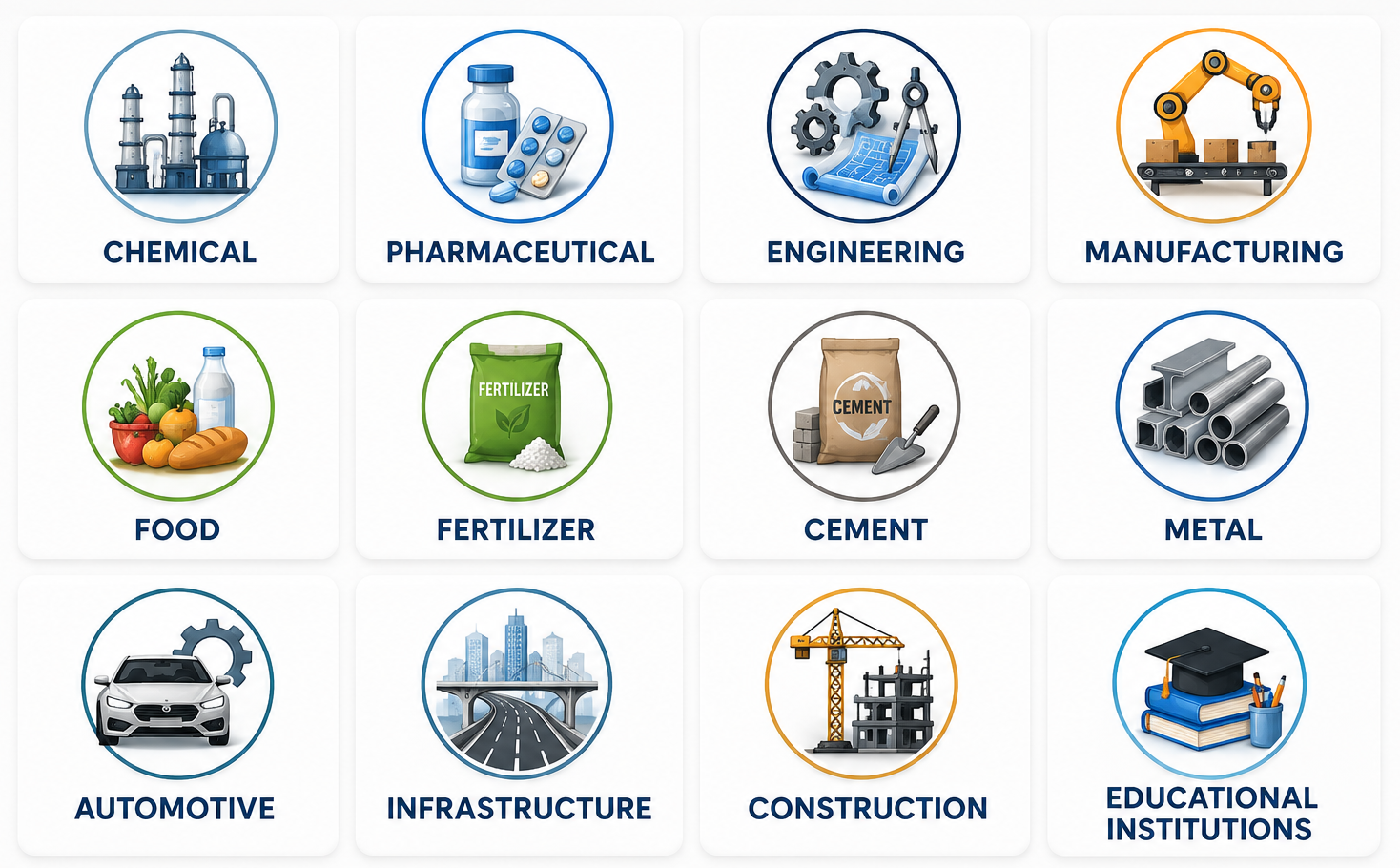
Who Needs Health & Safety Consultancy?
- Manufacturing organizations
- Engineering companies
- Chemical industries
- Process industries
- Ceramic industries
- Pharmaceutical organizations
- Food and beverage organizations
- Construction companies
- Oil and gas organizations
- Energy organizations
- Logistics and warehousing
- Healthcare organizations
- Hotels and large facilities
- Small and medium-sized enterprises
Why Choose Akshar Management Consultant for Health & Safety Consultancy?
Practical Safety Solutions
Our Health and Safety Consultant focuses on practical safety improvements based on actual workplace conditions, activities and hazards.
Broad Health & Safety Coverage
Our Health & Safety Consultancy Services cover multiple areas, including risk assessment, safety compliance, inspections, audits, incident investigation and emergency preparedness.
Customized Consultancy Scope
Our Occupational Health and Safety Consultancy can be adapted to your organization’s activities, workplace hazards and specific requirements.
Beyond ISO 45001
Our consultancy can support organizations that need practical health and safety improvement without necessarily pursuing ISO 45001 certification.
Implementation-Focused Support
We focus on practical implementation of safety controls and improvement actions rather than providing recommendations alone.
Frequently Asked Questions About Quality Consultancy
How are workplace hazards systematically identified?
- Workplace hazards can be identified through workplace inspections, job observations, process reviews, Job Safety Analysis, incident records, near-miss reports, employee consultation, equipment assessments and review of abnormal or emergency conditions. Hazard identification should cover routine, non-routine and reasonably foreseeable activities.
How is a health and safety risk matrix developed?
- A risk matrix is developed by defining criteria for likelihood and consequence and assigning a risk rating based on their combination. The methodology should clearly define risk levels, acceptance criteria and the actions required for each level of risk.
How are risk assessment scoring criteria determined?
- Scoring criteria should be based on factors relevant to the organization, such as injury severity, exposure frequency, probability of occurrence, number of persons exposed and effectiveness of existing controls. The methodology should be consistently applied across comparable activities.
How are existing controls considered during risk assessment?
- Existing controls should be identified before determining the current risk level. Their effectiveness should be evaluated based on factors such as reliability, implementation, maintenance, supervision and actual performance in controlling the identified hazard.
What is the difference between inherent risk and residual risk?
- Inherent risk is the level of risk associated with a hazard before considering control measures. Residual risk is the remaining risk after existing or additional controls have been implemented.
How is residual risk determined?
- Residual risk is evaluated by reassessing the likelihood and potential consequence after considering the effectiveness of implemented control measures. The remaining risk should be reviewed against the organization’s defined risk acceptance criteria.
How is the hierarchy of controls applied in risk assessment?
- Control measures are generally considered in the following order:
- Elimination
- Substitution
- Engineering controls
- Administrative controls
- Personal protective equipment
- Higher-level controls should be considered before relying primarily on administrative controls or PPE.
How is the effectiveness of a safety control verified?
- Control effectiveness can be verified through workplace observation, inspection, monitoring, employee feedback, audit findings, exposure measurements and testing of the control where applicable.
How often should risk assessments be reviewed?
- Risk assessments should be reviewed at planned intervals and when significant changes occur, such as new processes, equipment changes, incidents, changes in materials, new legal requirements, changes in work methods or identified control failures.
How are non-routine activities assessed?
- Non-routine activities should be assessed separately because normal operational controls may not adequately address their hazards. This can include maintenance, shutdowns, equipment cleaning, emergency repairs, installation and unusual operational activities.
How is a Job Safety Analysis conducted?
- A Job Safety Analysis (JSA) normally involves breaking a job into individual steps, identifying hazards associated with each step, determining applicable controls and establishing the safe method of performing the activity.
How detailed should a Job Safety Analysis be?
- A JSA should be detailed enough to identify significant hazards and critical control measures without breaking the job into unnecessarily small steps. The level of detail should reflect the complexity and risk of the activity.
How is a Job Hazard Analysis different from a general risk assessment?
- A general risk assessment may evaluate an activity, process or workplace area broadly. A Job Hazard Analysis focuses more specifically on the individual steps involved in performing a particular job and the hazards associated with each step.
How is a safe operating procedure developed?
- A safe operating procedure should consider the sequence of work, identified hazards, required controls, equipment requirements, PPE, responsibilities, prohibited actions and emergency arrangements.
- The procedure should reflect the actual work method rather than an idealized process that employees do not follow.
How are safety procedures validated before implementation?
- Safety procedures can be validated through workplace walkthroughs, employee consultation, practical trials, supervisor review and observation of the task being performed.
How is machine risk assessed?
- Machine risk assessment may consider hazards associated with moving parts, entanglement, crushing, cutting, shearing, ejection of materials, unexpected startup, electrical energy, stored energy and human interaction with the machine.
How is machine guarding effectiveness evaluated?
- Machine guarding should be evaluated for adequate hazard coverage, accessibility of danger zones, resistance to bypassing, proper installation, maintenance and potential creation of additional hazards.
What is hazardous energy in LOTO?
- Hazardous energy may include electrical, mechanical, hydraulic, pneumatic, chemical, thermal and gravitational energy, including stored or residual energy that could cause injury during servicing or maintenance.
How is a Lockout/Tagout procedure developed?
- A LOTO procedure should identify energy sources, isolation points, shutdown methods, locking arrangements, methods for controlling stored energy, verification of isolation and the sequence for restoring equipment to service.
Why is verification of isolation important during LOTO?
- Verification confirms that the equipment has been effectively isolated and cannot operate or release hazardous energy. Locking an isolation point alone does not necessarily demonstrate that all hazardous energy has been controlled.
How are permit-to-work requirements determined?
- A permit-to-work requirement is generally determined by evaluating the risk level, complexity, non-routine nature of the activity, potential interaction with other operations and the need for formal verification of controls before work begins.
How is a permit-to-work system integrated with risk assessment?
- The risk assessment identifies hazards and required controls, while the permit-to-work system verifies that relevant controls have been implemented and conditions remain acceptable before and during the work.
What should be verified before issuing a work permit?
- Depending on the type of work, verification may include job scope, risk assessment, isolation, atmospheric conditions, PPE, equipment condition, emergency arrangements, competent personnel and required approvals.
How is a hot work area assessed?
- A hot work assessment should consider flammable materials, combustible materials, vapors, gases, dust, nearby equipment, openings, sparks, fire protection, fire watch requirements and post-work monitoring.
How is confined space atmospheric testing performed?
- Atmospheric testing should follow a defined sequence and appropriate method. Common parameters may include oxygen concentration, flammable gas or vapor levels and relevant toxic contaminants. Testing should consider possible variations within different areas of the space.
Why should confined spaces be continuously monitored?
- Conditions inside a confined space may change because of ongoing work, chemical releases, ventilation changes, process conditions or ingress of hazardous gases. Continuous or periodic monitoring should therefore be determined based on the specific risk assessment.
How is a confined space rescue plan developed?
- A rescue plan should consider potential emergency scenarios, rescue methods, access and egress, communication, rescue equipment, trained personnel, external emergency support and response time.
How is work at height risk assessed?
- Assessment should consider working height, duration, access method, work surface, edge protection, weather conditions, falling objects, anchor points, fall distance and rescue arrangements.
How is fall protection selected?
- Fall protection should be selected based on the specific work activity and risk. The preferred approach is to first prevent falls through elimination, guardrails, protected platforms or other collective protection before relying on personal fall arrest equipment.
How is fall clearance calculated?
- Fall clearance should consider factors such as lanyard length, deceleration distance, harness stretch, worker height, anchor location and an appropriate safety margin to prevent contact with a lower level.
How are electrical hazards evaluated?
- Electrical risk assessment may consider voltage, available fault energy, exposed live parts, equipment condition, environment, access, isolation methods, maintenance activities and potential for arc flash or electric shock.
How is chemical exposure risk assessed?
- Chemical exposure assessment may consider chemical properties, quantity, concentration, exposure route, duration, frequency, work methods, ventilation, existing controls and relevant exposure limits.
What is the difference between hazard identification and exposure assessment?
- Hazard identification determines the harmful properties of a substance or activity. Exposure assessment evaluates the extent to which workers may actually come into contact with the identified hazard.
How is ventilation effectiveness evaluated for hazardous substances?
- Ventilation effectiveness may be evaluated by reviewing airflow, capture efficiency, equipment condition, maintenance records, process conditions, worker exposure and relevant monitoring results.
How is PPE selected technically?
- PPE should be selected based on the specific hazard, severity of exposure, performance requirements, compatibility with other PPE, fit, comfort, work conditions and applicable standards.
Why should PPE not be the first control measure?
- PPE depends heavily on correct selection, fit, use and maintenance. It generally provides less reliable control than eliminating the hazard or using engineering controls.
How is ergonomic risk assessed?
- Ergonomic risk assessment may consider force, repetition, posture, duration, vibration, manual handling, workstation design and recovery time.
How is manual handling risk evaluated?
- Manual handling risk can be evaluated by considering the load, lifting frequency, horizontal and vertical movement, body posture, travel distance, grip, work environment and individual capability.
How is contractor safety risk managed?
- Contractor safety management may include prequalification, competency evaluation, risk assessment, induction, permit-to-work, supervision, communication, inspection and performance monitoring.
How is contractor performance measured?
- Performance can be measured using indicators such as incidents, near misses, inspection findings, corrective action closure, permit compliance, training status, audit results and safety observations.
How is an incident investigation started?
- The initial investigation should focus on securing the area, providing emergency assistance, preserving relevant evidence, identifying involved persons and collecting factual information before conditions significantly change.
What evidence should be collected during incident investigation?
- Evidence may include photographs, equipment condition, documents, permits, training records, CCTV where available, witness information, physical evidence and relevant operational data.
How is a root cause distinguished from a contributing factor?
- A contributing factor influences the event but may not independently cause it. A root cause is an underlying deficiency that allowed the event or condition to occur and should be addressed to reduce the likelihood of recurrence.
How is the effectiveness of corrective action verified after an incident?
- Effectiveness can be evaluated through follow-up inspections, observation of changed work practices, review of incident recurrence, monitoring data, employee feedback and targeted audits.
How are near misses analyzed?
- Near misses should be analyzed using the same structured approach used for incidents, focusing on what could have happened, existing controls, failed or missing barriers, underlying causes and opportunities to prevent recurrence.
What are leading safety indicators?
- Leading indicators measure proactive safety activities and conditions that may influence future safety performance.
- Examples include hazard reports, safety inspections, training completion, corrective action closure, safety observations and risk assessment reviews.
What are lagging safety indicators?
- Lagging indicators measure events that have already occurred, such as injuries, lost workdays, recordable incidents, property damage and occupational illness cases.
Why should both leading and lagging indicators be monitored?
- Lagging indicators show past outcomes, while leading indicators provide information about the effectiveness of preventive safety activities. Using both provides a more balanced view of safety performance.
How are safety KPIs selected?
- Safety KPIs should be linked to significant risks, safety objectives and management priorities. A useful KPI should be relevant, measurable, reliable, understandable and capable of supporting action.
How is the effectiveness of a safety inspection program measured?
- Effectiveness can be evaluated through inspection completion, quality of findings, recurrence of unsafe conditions, corrective action closure, trend analysis and reduction of repeated deficiencies.
How are safety audit findings prioritized?
- Findings can be prioritized based on potential severity, likelihood, legal implications, number of people exposed, effectiveness of existing controls and urgency of corrective action.
How is emergency preparedness tested?
- Emergency preparedness can be tested through tabletop exercises, drills, simulations and full-scale exercises, depending on the nature of the identified emergency risk.
How is emergency drill performance evaluated?
- Drill performance can be evaluated based on response time, communication, employee actions, evacuation, equipment availability, coordination and achievement of defined exercise objectives.
How are emergency drill findings converted into improvement actions?
- Observations from drills should be documented, analyzed and assigned to responsible persons with defined completion dates. The effectiveness of completed actions should be reviewed during subsequent drills or exercises.
How is workplace exposure monitoring planned?
- Exposure monitoring should be planned based on identified hazards, exposure potential, work activities, applicable exposure limits, number of employees exposed and existing control measures.
How are health and safety legal requirements translated into operational controls?
- Applicable requirements should be reviewed to identify specific obligations and translated into procedures, inspections, training, equipment requirements, monitoring activities and documented controls relevant to the workplace.
How can digital systems improve health and safety management?
- Digital systems can support risk assessments, inspections, permit-to-work, incident reporting, corrective action tracking, audit management, safety observations, training records and safety performance dashboards.
How is continual improvement managed in health and safety?
- Continual improvement can be supported through risk assessment reviews, inspection findings, audit results, incident investigations, employee feedback, performance data and management review.
How is a technical health and safety consultancy project initiated?
- A technical Health & Safety Consultancy project normally begins with a review of the organization’s activities, processes, workplace hazards, existing controls, legal requirements, incident history and available safety performance data. Based on this review, priorities, assessment methods and improvement actions can be defined.